 Guide to the Azores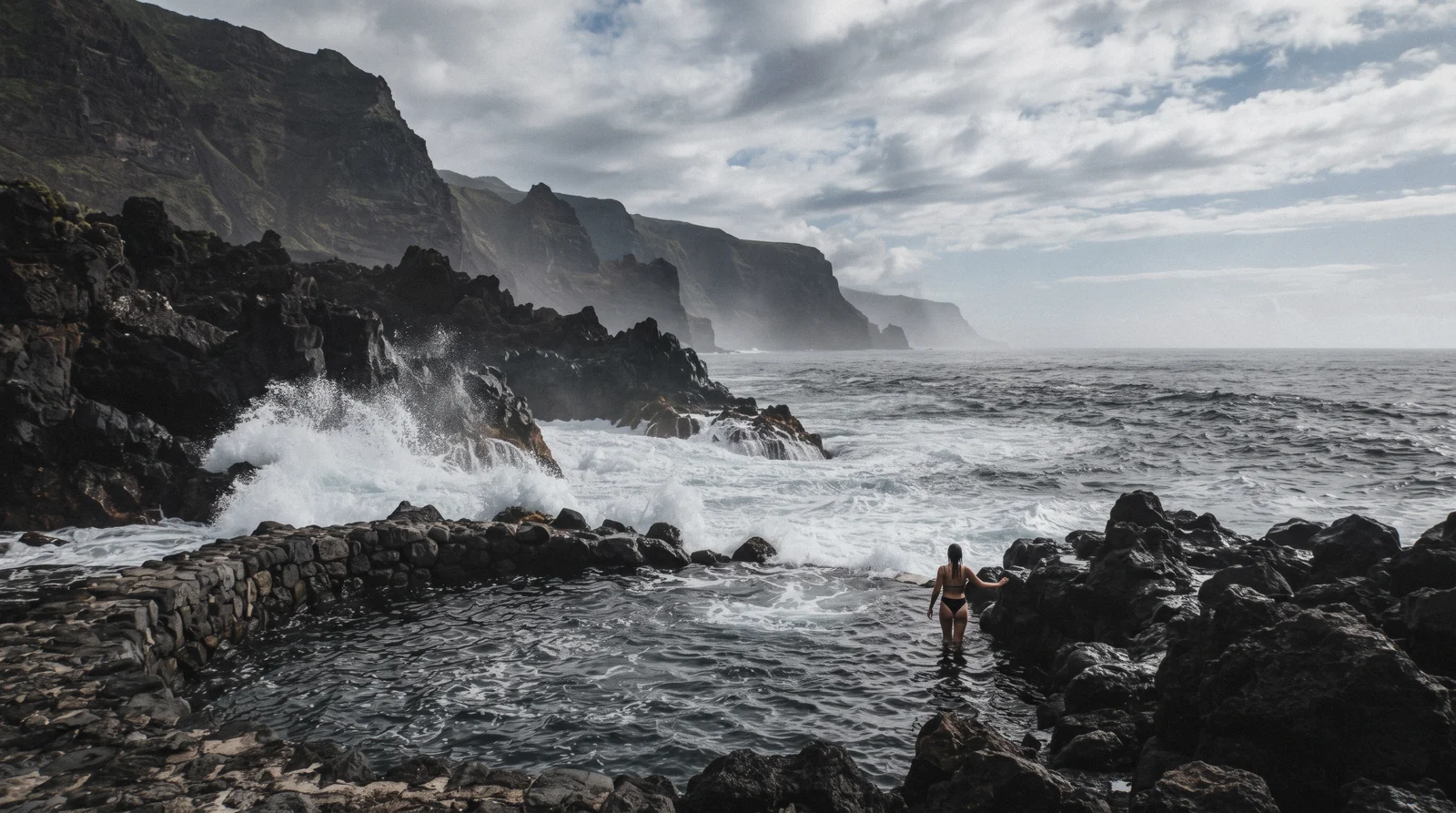
Is Azores Safe? 112, Health Cover and Ocean Rules
The question 'is azores safe' has a short factual answer and a long practical one. The emergency system runs on one number, the published risks are mostly environmental, and the missing guidance is about the sea. This page assembles what the official sources actually say, as part of the wider plan coverage on the Guide to the Azores.
Quick answer Emergency numbers, health cover, pool and trail rules
112 is the single emergency number in the Azores, usable from any phone since 2008, with INEM responding through it at any hour. Holders of the European Health Insurance Card get medically necessary state healthcare on the same terms as people insured in Portugal, but the card does not cover repatriation. The safety rules that are actually published are venue rules: bathe at Ferraria's natural pool at low tide, shower before and after the Terra Nostra tank, wear the helmet at Gruta do Natal. The ocean-safety picture, including swim flags and sea-current guidance, is published on no official Azores page in this research.
Key takeaways
- Whale watching runs year-round on licensed boats with conduct rules and fines, and a standard three-hour trip from Ponta Delgada costs $80.35.
- Thermal bathing has published capacity and conduct rules, and the Caldeira Velha manager may close the pools for weather conditions. Details in our Caldeira Velha guide.
- There is no ride-hailing service in Ponta Delgada and no published taxi fare table, so plan getting around in advance, especially at night.
- During the Fogo shuttle season the road between Caldeira Velha and Casa da Água is closed to private vehicles.
112 and Who Answers
The emergency number in the Azores is the same as everywhere in Portugal. You dial 112 from any phone, and the call reaches the emergency services including INEM, the national medical emergency institute, which responds through 112 at any hour. The single-number system has worked this way since 2008.
Practical backup lines
For anything that is not an emergency, the official tourist information points answer the phone. They are listed on VisitAzores with their numbers, though the contact page publishes no opening hours for them. Keep one saved alongside 112.
In Ponta Delgada the main desk sits on Avenida Infante D. Henrique, and there is a desk inside João Paulo II airport and another in Furnas, so a face-to-face fallback exists on São Miguel at the three points a visitor most often passes.
| Line | Number | What it is for |
|---|---|---|
| Emergency | 112 | Single European emergency number, usable from any phone since 2008, INEM responds at any hour |
| Ponta Delgada tourist info | +351 296 308 610 | Tourist information for Ponta Delgada and São Miguel services |
| Airport tourist info | +351 296 284 569 | Tourist information at João Paulo II airport |
| Furnas tourist info | +351 296 584 525 | Tourist information in Furnas |
Pharmacies
The usual Portuguese convention is a green-cross pharmacy duty rotation, so that one pharmacy in each area stays open out of hours. Official SNS pages were unreachable at research time, so no official page confirms this rotation for the Azores. Treat it as convention, not documented rule.
Health Cover: What the Card Does
The European Health Insurance Card, called CESD in Portuguese, is the documented healthcare mechanism for EU visitors. It entitles you to medically necessary state healthcare under the same conditions as people insured in Portugal. That means public providers only, and SNS co-payments may apply exactly as they would for a local.
What the card covers and what it does not
The card's own definition sets the limits. It exists for unplanned, medically necessary care in the public system. It is not an alternative to travel insurance and it never pays to fly you home.
| Covered by the card | Not covered |
|---|---|
| Medically necessary state healthcare on the same conditions as people insured in Portugal | Repatriation |
| Public providers only | Planned treatment |
| SNS co-payments may apply, paid as a local would pay them | Private providers |
Non-EU visitors
The card is a European scheme, so visitors from outside the EU are outside it by definition. As a consequence of that definition, they make their own arrangements for medical cover before travelling. The cost side of a trip is covered in our Azores costs page.
The Ocean: What No Official Page Publishes
Here is the negative finding first: no official Azores page in this research publishes swim flags, sea-current guidance or sun-safety rules. The Capitania and the DGRM would be the natural authorities for that material. Until one of them publishes it, no swim-flag system can be described here as documented. That gap matters, because the sea is the least rule-bound part of a trip to the islands.
The water rules that are published
What the official sources do publish are venue rules for bathing in thermal and ocean pools. They are precise, enforceable and worth reading before you go. Full details live in our hot springs coverage.
| Water | The published rule |
|---|---|
| Ferraria natural pool | Sea bathing in water above 30 °C at low tide. The tide is the only schedule published for the natural pool. |
| Terra Nostra tank | Water 38-42 °C. Showering before and after is mandatory. No jumping or diving. Maximum 30 minutes in the tank. 100 people maximum in the tank. |
| Poça da Dona Beija | Water around 39 °C. No swimming or diving. No glass anywhere. Babies need swim nappies. Maximum stay 1h30 per ticket. |
| Caldeira Velha | The manager may close the facility for weather conditions. Capacity 100 bathers in the pools, 250 visitors on site. |
| Lagoa do Fogo | No official page states a rule either way about bathing in the lagoon. |
How to use this
Check the tide before planning a swim at Ferraria, follow the mandatory shower rule at Terra Nostra, respect the 1h30 ticket at Poça da Dona Beija, and accept that Caldeira Velha can close on the manager's decision. Beyond those venues, you are in undocumented water.
Whale-Watching: Licensed Boats and Fines Compared
Whale watching is the activity with the most complete published safety framework in the Azores. Watching is possible year-round, more than 20 cetacean species occur in the waters, and sightings happen on 98% of trips. VisitAzores calls these waters one of the world's largest whale sanctuaries.
The legal framework
The activity is regulated by Decreto Legislativo Regional n.º 9/99/A, amended by DLR n.º 10/2003/A. Operators must be licensed, conduct rules apply to how boats approach the animals, and violations carry fines from $286.50 (€250) up to $45,840 (€40,000). The practical rule for visitors is simple: book with a licensed operator, which is what the booking platforms list. Our whale-watching page covers the operators in detail, and a standard three-hour trip from Ponta Delgada costs $80.35.
The season detail matters for planning rather than safety: resident species are the common dolphin and the common bottlenose dolphin, blue whales pass at the end of winter, and spotted dolphins and sperm whales are summer animals. The practical takeaway is that a regulated boat is available in every month, so no trip needs an unlicensed operator to squeeze into a season.
| The fact | The figure |
|---|---|
| Cetacean species occurring in the waters | More than 20 |
| Trip sighting rate | Sightings on 98% of trips |
| Fine floor for conduct violations | $286.50 (€250) |
| Fine ceiling for conduct violations | $45,840 (€40,000) |
| Legal basis | Decreto Legislativo Regional n.º 9/99/A, amended by 10/2003/A |
Data currency
The fines and figures in this section were last verified in Q3 2026.
Underground and Upland: Caves, Craters and Pico
The geological sites publish their own safety numbers. Caves quote humidity and capacity, and the Pico mountain portal defines who may climb and how. These are the documented rules for going under and up.
Algar do Carvão and Gruta do Natal
Algar do Carvão on Terceira is a volcanic chimney descended by 338 steps to a lake 90 m below. Entry costs $11.46 (€10) per person, and children under 12 enter free with a paying adult. Gruta do Natal is a lava tube with humidity above 90 percent.
Helmets and a briefing are part of the visit and make it slightly longer than 30 minutes. Capacity is 80 people inside, with groups capped at 20. Entry costs $10.31 (€9).
| Site | The safety fact |
|---|---|
| Algar do Carvão | 338 steps down to a lake 90 m below. Children under 12 free with a paying adult. Possible short-notice suspensions during visitor-centre works. |
| Gruta do Natal | Humidity above 90%. Helmets and a briefing are part of the visit. Capacity 80 people inside, groups maximum 20. |
| Pico mountain | The booking portal offers an autonomous ascent without guide category, so a mandatory guide is unproven from official text. |
| Pico minors | Minors must be accompanied, with a referenced minimum age of 5. |
| Pico price | The climb price sits inside the booking app and is unpublished on the fetchable pages. |
Reading the Pico portal honestly
Many sources state flatly that a guide is mandatory on Pico. The official booking portal at montanhapico.azores.gov.pt does not say that in its fetchable text, because it offers a Subida autónoma sem guia category, an autonomous ascent without guide. Access rules are set by Portaria n.º 25/2020, first amended by Portaria n.º 64/2023, and that text should be read before the guide question is settled.
What is documented: minors must be accompanied and the referenced minimum age is 5. Bookings and prices live in our Pico mountain tickets guide, with more on the climb itself in Pico mountain, and the cave visit in Algar do Carvão.
Weather, Roads and Closures
The climate is documented in detail by IPMA, the Portuguese weather service, using the 1991-2020 normals for the Ponta Delgada observatory. The numbers explain why weather is rarely the hazard here, while the road rules are the part that catches visitors out.
The published climate facts
IPMA records mean daily maxima between 17.4 °C and 26.0 °C through the year, an average of zero days at or above 30 °C, zero frost days, and 122.3 rain days a year. The records are 30.1 °C at the top and 5.0 °C at the bottom. IPMA notes that the series is hybrid, combining observed and modelled data, so values can shift with quality-control updates.
Seasonal planning belongs in azores weather and best time to visit.
| Figure | What it means |
|---|---|
| 17.4-26.0 °C | Range of mean daily maxima through the year |
| 0 days at or above 30 °C | Annual average, so heat extremes are absent from the record |
| 0 frost days | Annual average, so freezing conditions are absent from the record |
| 122.3 rain days a year | Days with at least 1 mm of rain |
| 30.1 °C record high | The highest temperature ever recorded at the station |
| 5.0 °C record low | The lowest temperature ever recorded at the station |
Closure powers and the Fogo road
Two closure rules are published. The manager of Caldeira Velha may close the facility for weather conditions. And during the Fogo shuttle season, which runs from 1 August to 30 September, the road between Caldeira Velha and Casa da Água is closed to private visitors' vehicles.
Only tour operators, travel agencies, taxis and residents may drive it. The shuttle itself costs $9.17 (€8) for non-resident adults and runs daily from 09:00 to 20:00. Our Lagoa do Fogo page has the routes.
| Rule | Detail |
|---|---|
| Caldeira Velha weather closure | The manager may close the facility for weather conditions |
| Fogo road restriction | Closed to private vehicles while the shuttle season runs, 1 August to 30 September |
| Who may still drive it | Tour operators, travel agencies, taxis and residents |
Transport after dark
No ride-hailing service operates in Ponta Delgada and no official taxi fare table exists for the city. The practical consequence is that night transport is planned, not improvised. Book ahead or rely on your accommodation.
See getting around for the full picture. One clock note for day planning: the islands run one hour behind mainland Portugal, an offset published on Wikipedia because no official page states it, so daylight lags Lisbon-clock instincts and an evening return stays lighter than you would expect at home.
Solo and Night-Time: What the Sources Do and Do Not Say
No official statistic or advisory in this research addresses solo female safety specifically. The honest answer is therefore structural rather than reassuring, and it is built only from documented facts.
The structural picture
The emergency system is one number, 112, answered at any hour. Healthcare has a documented mechanism through the European Health Insurance Card for EU visitors. The published risks are environmental: the tide at Ferraria, weather closures, cave humidity, canyon water.
Nothing in the official material frames urban crime as a documented hazard, and equally nothing documents its absence.
| Element | What is documented |
|---|---|
| Emergency response | 112 from any phone since 2008, INEM at any hour |
| Healthcare | EHIC gives medically necessary state care on Portuguese terms, public providers only |
| Published hazards | Tide, weather, capacity rules, cave humidity, canyon terrain |
| Night transport | No ride-hailing and no taxi fare table, so it must be planned ahead |
The planning item
The transport gap is the one item that needs action in advance. Without ride-hailing and without published fares, a solo traveller should confirm how they return from Furnas, Ferraria or a late thermal session before setting out. A rental car solves it at the price of driving, covered in azores car rental, or you can work around it with the options in getting around.
A Sourced Checklist Before Any Day Out
Every line below is a published rule or figure from the sections above, assembled into the order you would actually use them: before you book, before you drive, before you swim, before you descend.
Before you book
Pick licensed and rule-bound operators: whale watching is a licensed activity under the regional decree, with sightings on 98% of trips and fines from $286.50 (€250) to $45,840 (€40,000) for conduct violations, and canyoning runs with certified guides, such as this guided descent.
Before you drive
Check the closure rules: during the Fogo shuttle season, 1 August to 30 September, the Caldeira Velha to Casa da Água road is closed to private visitors' vehicles, and no ride-hailing exists to fall back on. The transport picture is in getting around.
Before you swim
Check the tide at Ferraria, plan the mandatory shower at Terra Nostra, respect the 1h30 ticket at Poça da Dona Beija, and remember Caldeira Velha can close on the manager's decision. There is no official swim-flag system to consult anywhere.
Before you descend
Take the cave numbers seriously: 338 steps down at Algar do Carvão, humidity above 90% and a mandatory helmet and briefing at Gruta do Natal, 80 people maximum inside. On Pico, minors must be accompanied, with a referenced minimum age of 5.
If something goes wrong
One number covers everything: 112, from any phone, answered at any hour, with INEM on the other end. EU card holders carry the EHIC for medically necessary state care. Save both facts before the day starts.
Do and Do Not, From the Published Rules
Every line here restates a rule or figure documented above, from venue pages, the regional decree and the emergency services.
Do
- Check the tide before going to the Ferraria natural pool, since low tide is the only published bathing condition.
- Shower before and after bathing in the Terra Nostra thermal tank, as the rule is mandatory.
- Wear dark swimwear in iron-rich thermal water, which stains light fabrics.
- Take the helmet and the briefing at Gruta do Natal, where humidity exceeds 90%.
- Save 112 in your phone, remembering it works from any phone and INEM answers at any hour.
- Book whale watching with a licensed operator, such as this three-hour trip from Ponta Delgada.
Don't
- Do not jump or dive in the thermal tanks at Terra Nostra or Poça da Dona Beija.
- Do not bring glass anywhere at Poça da Dona Beija.
- Do not drive the Caldeira Velha to Casa da Água road in shuttle season, from 1 August to 30 September.
- Do not take a baby into the water at Poça da Dona Beija without swim nappies.
- Do not expect an Uber or equivalent in Ponta Delgada, because none operates there.
- Do not treat blogs as a swim-safety authority, since no official page publishes swim flags or current guidance.
Where a rule is not published, this page says so instead of inventing one.
Licensed Boats and Guided Days
Two catalogued days that put you inside the licensed, guided framework this page describes.
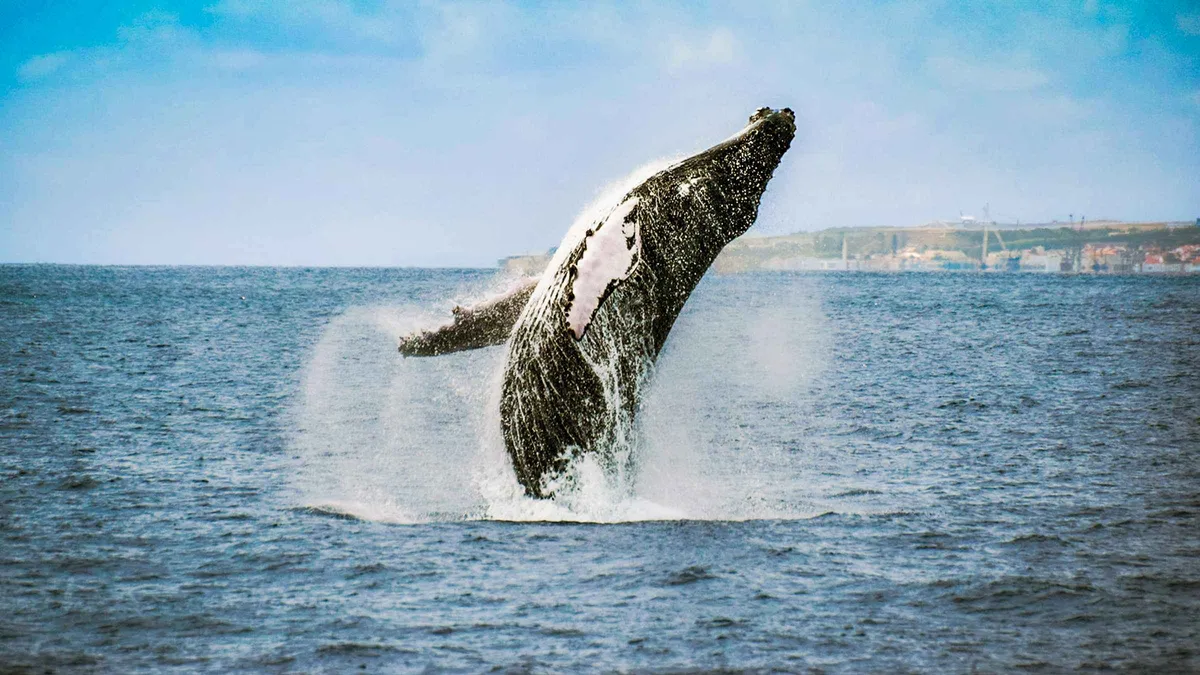 from $80.35
#1 selling water activity
from $80.35
#1 selling water activity From Ponta Delgada: Whale and Dolphin Watching Trip
A three-hour whale and dolphin watching trip out of Ponta Delgada on the lookout for minke whales, dolphins and turtles, and the listing's top-selling water activity in the Azores. Good for travelers who want the classic whale watching trip at the island's most accessible price point.
Check Availability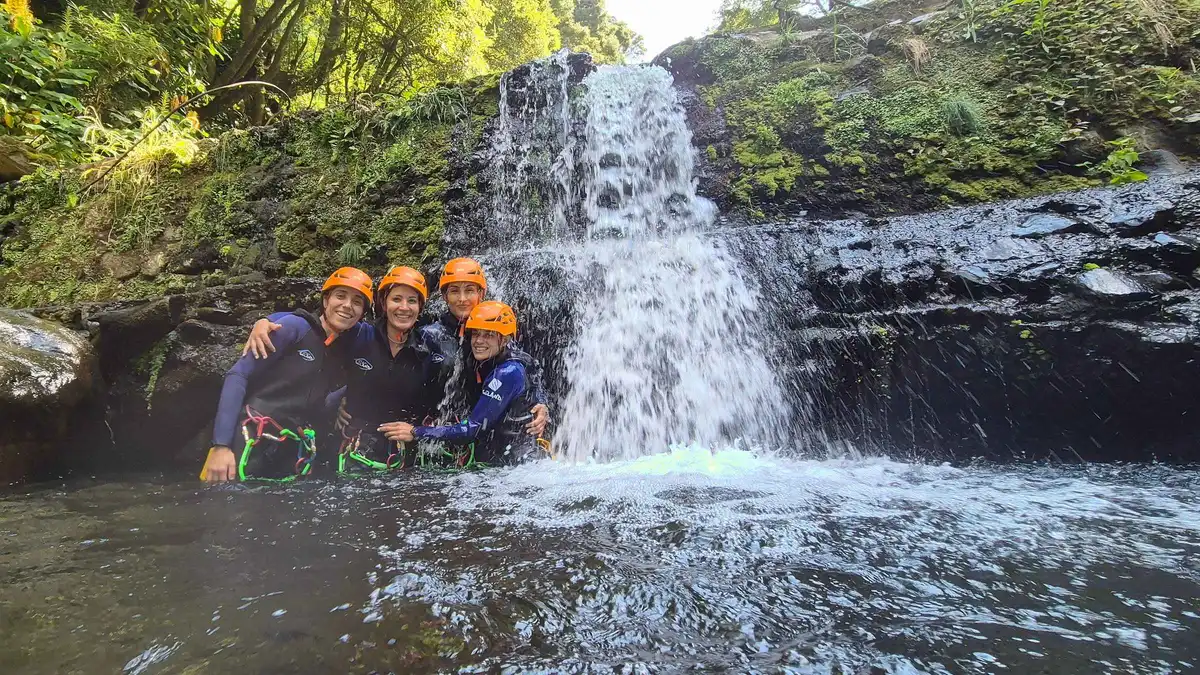 from $103.31
Small group
from $103.31
Small group Canyoning Adventure: Medium-Level Canyoning Salto do Cabrito
A medium-level canyoning route at Salto do Cabrito with jumps of 6 to 8 meters (always optional), natural rock slides and rappels past 20 meters, run by ICA-certified guides in groups capped at eight. A photo package is included. Good for travelers with some outdoor experience who want the harder line.
Check AvailabilityPrices, ratings and details are the platform's own. dollar figures are the listed prices — the platform bills in your account's currency.
Safety Next Doors
Azores Costs
Budget for tour prices, co-payments and the Ponta Delgada tourist tax.
Azores With Kids
Age tiers that decide safety, from the Pico minimum age of 5 to under-12 cave rules.
Azores Hikes
Trail grades and conditions for the terrain that is the main published hazard.
Getting Around
Planning transport where no ride-hailing and no taxi fare table exist.
Azores Weather
The full climate record behind the closure powers on this page.
Is Azores Safe: Questions
Is the Azores safe for Americans?
112 works exactly the same for any phone, and INEM answers at any hour. The EHIC is a European card scheme, so non-EU visitors from the United States arrange their own medical cover. Direct flights connect Boston, New York and Toronto to the islands, covered in getting to the Azores.
Is Azores safe for solo female travellers?
No official advisory in this research addresses solo female safety specifically. The structural facts are these: one emergency number answered at any hour, a documented healthcare mechanism for EU card holders, published risks that are environmental rather than urban, and a transport gap because there is no ride-hailing and no taxi fare table. Plan getting around in advance, especially at night.
Are there dangerous animals in the Azores?
No official page in this research documents dangerous land wildlife. The hazards the official material actually regulates are water, tide, weather and terrain, from thermal-pool conduct rules to trail grades listed in azores hikes.
What number do you call for an ambulance in the Azores?
Call 112. It is the single emergency number, usable from any phone since 2008, and INEM responds through it at any hour.
Does the EHIC cover the Azores?
Yes, because the Azores are Portugal. Card holders get medically necessary state healthcare under the same conditions as people insured in Portugal, from public providers, with possible SNS co-payments. It does not cover repatriation or planned treatment. More in azores costs.
Do you need a guide to climb Pico?
The official booking portal offers an autonomous ascent without guide category, so a mandatory guide is unproven from the official text. Minors must be accompanied, with a referenced minimum age of 5. The climb price sits inside the booking app and is not published on the fetchable pages. See Pico mountain tickets.
Is it safe to swim at the Ferraria pools?
The published rule is to bathe at low tide, when the natural pool holds sea water above 30 °C. The tide is the only schedule the parks site publishes for the pool. Details in Ferraria.
Which island is nicer?
Nicer is not a sourced category, so this page does not pretend to settle it. What the documents support is structural: the Azores run on protected-area rules, licensed whale-watching boats and published venue rules, and Madeira is a different landscape entirely. The sourced side-by-side, with every Azores half documented and every Madeira claim flagged, is on our Azores vs Madeira page.
Is Azores very expensive?
Very is not what the published figures show. Every ticketed venue in this research costs $19.48 (€17) or less per adult, the Fogo shuttle is $9.17 (€8), and the expensive lines are the flight and the tours. The full breakdown sits on our Azores costs page.
Do they speak English in the Azores?
Portuguese is the language of the islands, and English is easy to function in: the regional tourist board publishes its official guidance in English as well as Portuguese, the venue rules quoted on this page are published in both, and the tour catalogue here is described in English for English-speaking visitors.
Azores, Safe By Nature
The regional tourist board's own short on safety and nature.
Video: Visit AzoresDriving in the Azores: Advice Before You Rent a Car on Sao Miguel
Road realities, the biggest practical safety decision.
Video: Jared DillinghamAre the Azores safe?
A direct question-and-answer take that matches this page's method.
Video: Ask About Parenting & CareWe may earn a commission if you book through one of our links, at no extra cost to you. Full affiliate disclosure